Last reviewed: November 2026 · Reviewed by the Retreats México editorial team
Quick answer
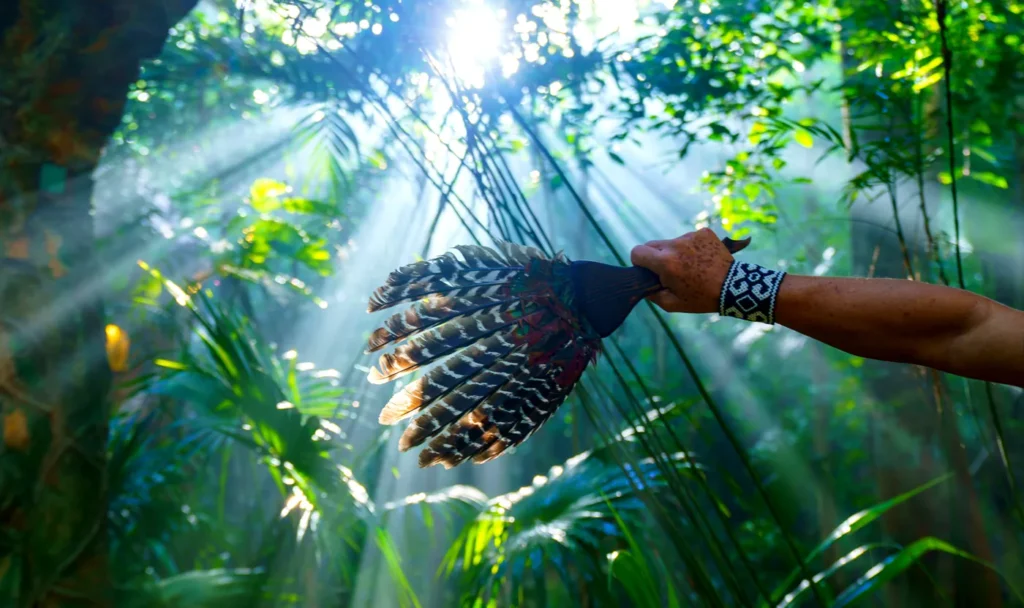
The Totonac (Totonaca) are an Indigenous people of the Gulf Coast of Mexico, mainly in Veracruz and Puebla. Their heritage includes the ancient city of El Tajín (a UNESCO World Heritage Site), the Voladores ceremony (UNESCO Intangible Cultural Heritage) and a living tradition of healers who work with plants, prayer and ritual. UNESCO recognizes the Centre for Indigenous Arts in El Tajín as a model for safeguarding this knowledge.
When people think of Indigenous Mexico, they often think of the Maya or the Aztecs. But the Gulf Coast is home to another remarkable people: the Totonac, whose traditions are very much alive today.
Key takeaways
- The Totonac live mainly in Veracruz and Puebla, on Mexico’s Gulf Coast.
- El Tajín and the Voladores are recognized by UNESCO.
- Healers hold an important place in Totonac communities.
- Their knowledge is passed down through families and community centers.
El Tajín: the city of thunder
El Tajín, in northern Veracruz, flourished between roughly 800 and 1200 CE. It is famous for the Pyramid of the Niches and its many ballcourts, and it is a UNESCO World Heritage Site.
The Voladores: flying men
In the ritual ceremony of the Voladores, men climb a tall pole and descend spinning on ropes while a musician plays flute and drum at the top. It is a ceremony of fertility and connection with nature, and UNESCO inscribed it as Intangible Cultural Heritage in 2009.
Healers and traditional knowledge
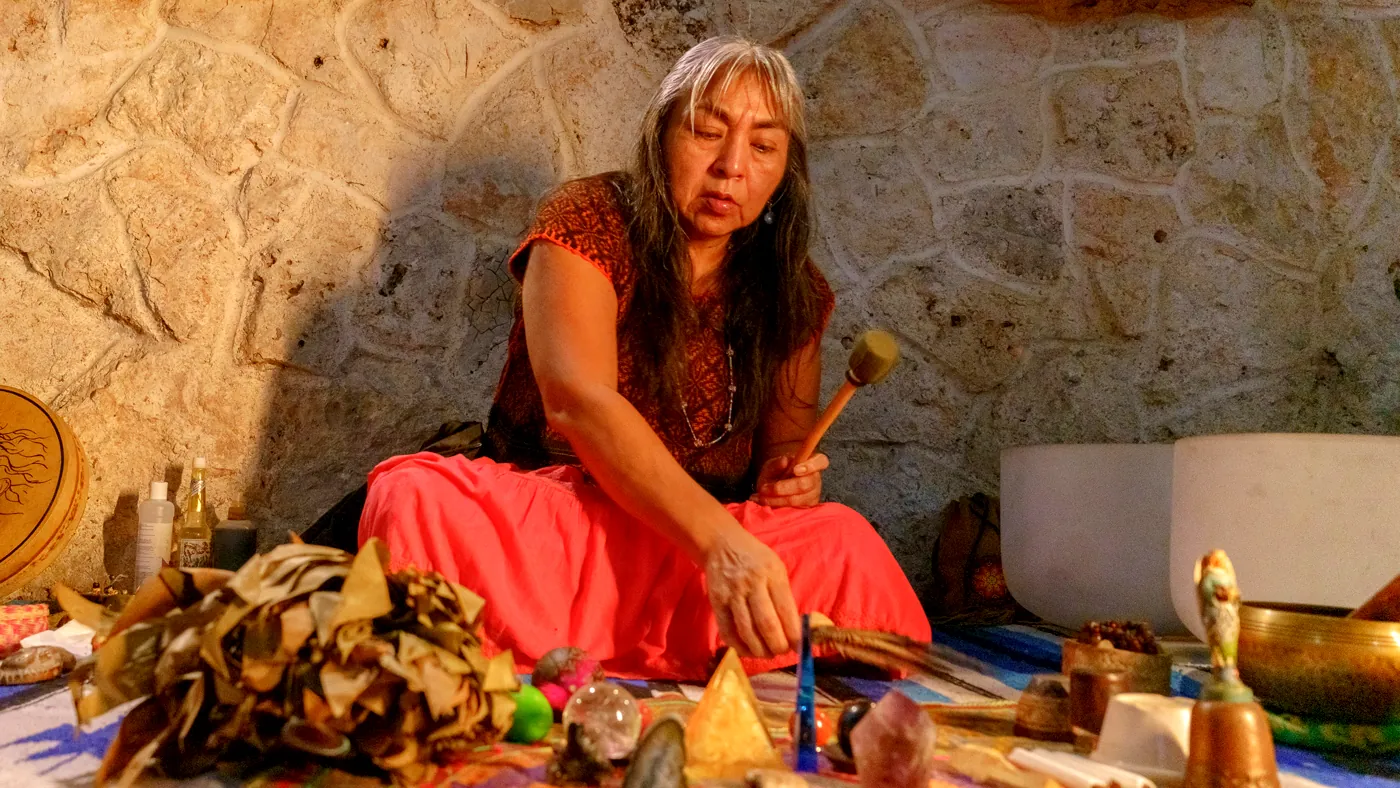
In Totonac communities, healers have long cared for people with plants, prayer, steam baths and ritual. UNESCO describes how the Centre for Indigenous Arts (Xtaxkgakget Makgkaxtlawana) in El Tajín organizes learning in “houses” led by elders, including one dedicated to traditional healing, so the knowledge passes to new generations.
This knowledge also travels with families. Sandra “Sandy” Reyes, the ceremony guide at Bluestone Retreats near Cancún, was born in Veracruz into a family of Totonac healers, and her temazcal work grows from that connection to plants and the earth. Read Sandy’s story.
How to experience Totonac culture respectfully
- Visit El Tajín and the nearby town of Papantla, where the Voladores perform.
- Buy crafts directly from artisans.
- Join ceremonies only with guides who have a real connection to the tradition, and never treat them as entertainment.
Totonac culture today
The Totonac people live mainly in northern Veracruz and the Sierra Norte of Puebla. Many still speak the Totonac language, and towns like Papantla keep alive music, dance, crafts and the cultivation of vanilla, a crop closely tied to the region’s history.
Cumbre Tajín
Each year around the spring equinox, the archaeological site of El Tajín hosts Cumbre Tajín, a large cultural festival with music, workshops and Totonac traditions. It is one of the best times to experience the culture, though it gets busy.
The house of healers
At the Centre for Indigenous Arts in El Tajín, knowledge is organized in “houses” led by elders. One of them is dedicated to traditional healing, where knowledge about plants, steam baths and ritual is passed to new generations, as described by UNESCO.
From Veracruz to the Mayan jungle
Traditions travel with people. Sandra “Sandy” Reyes, born in Veracruz into a family of Totonac healers, brought that connection to the Mayan jungle near Cancún, where she now guides the temazcal at Bluestone. It is a reminder that living traditions are carried by families as much as by places.
How to visit El Tajín
- The nearest town is Papantla; Poza Rica is the closest airport.
- Go early to avoid the heat.
- Watch the Voladores at the entrance of the site.
- Visit the on-site museum to understand the city’s history.
Vanilla: a Totonac gift to the world
The region around Papantla is famous for vanilla, an orchid native to Mexico that the Totonac cultivated long before it became a global flavor. Visiting a vanilla farm is a beautiful way to connect with the region’s history.
The Totonac language
Totonac is still spoken by many people in Veracruz and Puebla. Words, songs and prayers in the language carry knowledge that is hard to translate, which is why community centers and families work to keep it alive.
What travelers can learn
Totonac traditions show a close relationship between people, plants, the land and the sky. Ceremonies like the Voladores ask for rain and fertility; healers work with plants and steam. For travelers, the lesson is respect: these are living practices, not performances.
Planning a trip to Totonac country
- Base yourself in Papantla for El Tajín and the Voladores.
- Visit during Cumbre Tajín for festivals, or outside it for calm.
- Hire local guides to support the community.
- Combine with Veracruz’s coast and coffee regions.
Glossary: key terms
- Totonac (Totonaca): an Indigenous people of Veracruz and Puebla.
- El Tajín: a pre-Hispanic city and UNESCO World Heritage Site.
- Voladores: the “flying men” ceremony recognized by UNESCO.
- Papantla: the town near El Tajín, famous for vanilla.
- Cumbre Tajín: a yearly cultural festival around the spring equinox.
These names will help you navigate the region and understand the background of guides like Sandra “Sandy” Reyes, who comes from a family of Totonac healers.
The bottom line
The Totonac people of Veracruz carry one of Mexico’s richest living traditions, from El Tajín and the Voladores to vanilla and their healers. Visiting the region, learning a few words and supporting local people are good ways to honor it. And through guides like Sandra “Sandy” Reyes, that heritage also reaches travelers in the jungle near Cancún.
Compare your options
Explore Totonac culture
- Visit El Tajín Papantla, Veracruz
Official tourism page for the Totonac archaeological site. - Centre for Indigenous Arts (UNESCO) El Tajín, Veracruz
Where Totonac elders teach traditional knowledge, including healing. - Sessions with Sandy (Bluestone) Cancún
Temazcal, sound journeys and individual sessions with Sandra “Sandy” Reyes.
Listings are independent and unpaid. Retreats México is published by Bluestone Retreats, which appears here alongside other options. How we write.
Frequently asked questions
Who are the Totonac people?
An Indigenous people of Mexico’s Gulf Coast, mainly in Veracruz and Puebla, known for El Tajín, the Voladores ceremony and their traditional knowledge.
What is El Tajín?
A pre-Hispanic city in northern Veracruz, famous for the Pyramid of the Niches, and a UNESCO World Heritage Site.
What are the Voladores?
A Totonac ceremony in which men descend spinning from a tall pole on ropes. UNESCO recognized it as Intangible Cultural Heritage in 2009.
Where do the Totonac people live?
Mainly in northern Veracruz and the Sierra Norte of Puebla, around towns like Papantla.
What is Cumbre Tajín?
A cultural festival held each year around the spring equinox at El Tajín, celebrating Totonac culture with music, workshops and ceremonies.
Is vanilla from Mexico?
Yes. Vanilla is an orchid native to Mexico, and the Totonac region around Papantla is historically famous for it.
What does Totonac mean?
It is the name of an Indigenous people of Veracruz and Puebla, known for El Tajín, the Voladores and their healing traditions.