Last reviewed: November 2026 · Reviewed by the Retreats México editorial team
Quick answer
Voice and body practices include group singing, chanting, free dance and conscious movement such as 5Rhythms or ecstatic dance. They help people get out of their heads and into their bodies. No experience or talent is needed; good facilitators make it safe to participate at your own level.
If the idea of singing in front of strangers makes you nervous, you are not alone. It is also one of the things people end up loving most.
Key takeaways
- Singing and movement help shift attention from thinking to feeling.
- Conscious dance practices like 5Rhythms are taught worldwide.
- Group music-making has been studied for well-being.
- You can always participate at your own level.
Conscious movement
Conscious movement is moving with attention, without choreography. The best-known method is 5Rhythms, created by Gabrielle Roth, which guides dancers through five rhythms from flowing to stillness. Ecstatic dance is a freer cousin.
Singing and expression
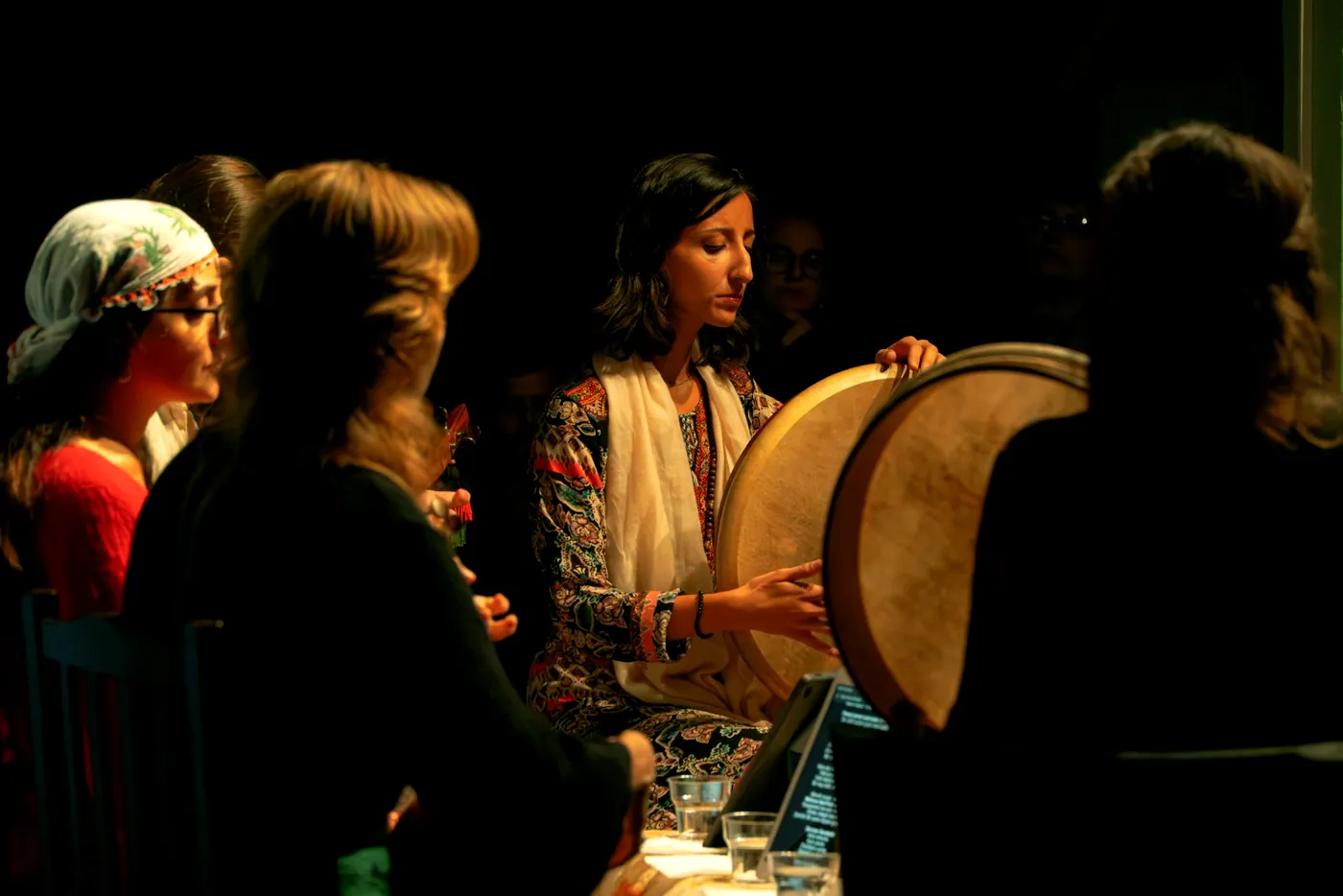
In ceremony, songs are often simple and repeated, so anyone can join after a few rounds. Group music-making has been studied too: a 2016 study of group drumming found improvements in depression, anxiety and social resilience over ten weeks (Fancourt et al., PLoS One). See also drum meditation.
Tips if you feel shy
- Close your eyes; nobody is watching.
- Hum instead of singing.
- Move small; a sway counts.
- Stand at the back or the edge of the room.
Why the body matters
Many retreat practices start from a simple idea: we hold stress in the body, not only in the mind. Moving, breathing and making sound are ways to notice and release tension that talking alone may not reach.
Types of conscious movement
- 5Rhythms: a structured wave of flowing, staccato, chaos, lyrical and stillness.
- Ecstatic dance: free movement to music, no talking, no alcohol.
- Authentic movement: moving with eyes closed while a witness holds the space.
- Yoga and qigong: slower, structured practices.
- Traditional dance: in Mexico, some ceremonies include danza with drums and rattles.
Singing in ceremony
Ceremonial songs are usually short, repeated and easy to learn. Some are in Spanish, some in Indigenous languages such as Nahuatl. You do not need to understand every word; the repetition creates a shared rhythm that brings the group together.
A simple voice practice
- Sit comfortably and breathe slowly.
- Hum with your lips closed for one minute.
- Open into an “ahh” sound for another minute.
- Notice the vibration in your chest and face.
- Sit in silence for a minute.
What research suggests
Studies on group music-making are still growing, but results like the ten-week group drumming study in PLoS One suggest that making music together can support mood and social connection.
Where to try it
Look for 5Rhythms classes in your city before your trip, and ask retreats whether their program includes dance, singing or voice work. At women’s retreats such as Bluestone’s Alquimia de la Mujer Despierta, voice and body are central themes.
A sample voice and body session
- Arriving (10 min): breathing and gentle stretching.
- Warming up (15 min): shaking, walking, free movement to music.
- Voice (15 min): humming, toning, a simple group song.
- Peak (20 min): more energetic dance or drumming.
- Integration (15 min): lying down, silence, then sharing in pairs or a circle.
Voice and body for women
Many women’s retreats focus on voice and body because so many women learn to be quiet and small. Singing loudly, dancing freely and taking up space in a safe group can feel liberating. It is one of the themes of Bluestone’s women’s retreat, Alquimia de la Mujer Despierta.
What to wear
Comfortable clothes that let you move: leggings or loose pants, a light top and bare feet or socks. Avoid jewelry that jingles or catches.
Keeping it alive at home
- Dance to one song every morning.
- Sing in the car or shower without judging yourself.
- Try a local 5Rhythms or ecstatic dance class.
- Hum for a minute when you feel stressed.
When it brings up emotions
Moving and singing can bring up tears, laughter or old memories. That is normal. Good facilitators leave time to share and rest afterwards, and you can always slow down or sit out.
Glossary: key terms
- Toning: sustaining a single vowel sound to feel its vibration.
- Ecstatic dance: free-form dance to music, without talking or alcohol.
- 5Rhythms: a movement practice created by Gabrielle Roth: flowing, staccato, chaos, lyrical and stillness.
- Authentic movement: moving with eyes closed while a witness observes.
- Mantra: a repeated word or phrase, sung or spoken.
Voice, body and the temazcal
Inside the temazcal, singing is not decoration: it helps participants breathe, stay present and support each other through the heat. At Bluestone, songs accompany the temazcal guided by Sandra “Sandy” Reyes, and many participants say singing is what carried them through the hardest round.
The bottom line
Voice and body practices invite you out of your head and into the present moment. You do not need talent, only willingness: hum, sway, sing along when you are ready. Start small, choose a facilitator who makes the space feel safe, and give yourself time to rest and share afterwards. Many people who arrive shy leave saying that singing and dancing with the group was the highlight of their retreat.
Compare your options
Where to try voice and movement
- 5Rhythms Worldwide
The conscious-dance practice created by Gabrielle Roth, with classes in many cities. - Esalen Institute Big Sur, California
Historic center for workshops on personal growth and nature connection. - Holistika Tulum Tulum
Jungle hotel and wellness center with yoga, sound and holistic programs. - Alquimia de la Mujer Despierta (Bluestone) Cancún
Bluestone’s women’s retreat: circles, temazcal, voice, body and sisterhood in the jungle. - Kripalu Center for Yoga & Health Massachusetts, USA
A well-known US retreat center, a useful benchmark for programs and prices.
Listings are independent and unpaid. Retreats México is published by Bluestone Retreats, which appears here alongside other options. How we write.
Frequently asked questions
What is conscious movement?
Moving with awareness and without set choreography. 5Rhythms and ecstatic dance are well-known examples.
Do I need to sing well to join?
No. Ceremony songs are simple and repetitive, and the goal is expression, not performance.
Why do retreats include dance and singing?
They help people get out of their heads, release tension and connect with the group.
What is ecstatic dance?
A free-form dance practice to music, usually without talking or alcohol, where each person moves however they feel.
What languages are ceremony songs in?
Often Spanish or Indigenous languages such as Nahuatl. Songs are short and repeated, so anyone can join.
Is voice work good for shy people?
Yes. Starting with humming in a group is gentle, and many shy people find it one of the most freeing parts of a retreat.
What should I wear to a conscious movement session?
Comfortable clothes that let you move freely, with bare feet or socks and no jingling jewelry.
Why do women’s retreats include voice work?
Because many women learn to be quiet and small; singing and moving freely in a safe group can feel liberating.
What is toning?
A voice practice of sustaining a single vowel sound to feel its vibration in the body.
Sources & further reading