Last reviewed: November 2026 · Reviewed by the Retreats México editorial team
Quick answer
In Mexico, women healers are often called curanderas, and their practice, curanderismo, combines Indigenous and Spanish healing traditions: herbs, prayer, cleansing rituals and the temazcal. Many travelers, especially women, look for a woman-led ceremony because they feel safer and more understood. To choose a guide, look at her lineage and experience, how she talks about safety, and whether she makes realistic promises.
“Shaman” is the word most people type into Google. In Mexico, you will more often hear curandera (healer), partera (midwife) or simply abuela (grandmother) for women who carry healing traditions.
Key takeaways
- Curanderismo is a living healing tradition in Mexico and the US Southwest.
- Women have always been central to it, as healers, midwives and ceremony leaders.
- A good guide has real roots, clear boundaries and no miracle promises.
- Ask questions and trust your instincts.
What is curanderismo?
Curanderismo is a folk healing tradition that blends Indigenous Mesoamerican knowledge with elements brought from Spain. It includes herbal remedies, cleansing rituals (limpias), prayer, massage and the temazcal. The University of New Mexico’s curanderismo program has studied and taught it for years, and the Smithsonian Center for Folklife has documented the work of curanderas.
Why women-led ceremonies?
- Safety and comfort: many women feel more at ease with a female guide, especially in vulnerable moments.
- Tradition: in Mesoamerica, women have long cared for birth, the temazcal and family health.
- A different style: many participants describe women-led ceremonies as more nurturing and grounded.
How to choose a female guide
- Where does her knowledge come from? A family lineage, a community, years of apprenticeship.
- How long has she been guiding? Experience matters.
- How does she talk about safety? She should ask about your health and medications.
- What does she promise? Be careful with anyone who promises to cure you.
- Who supports her? A good team around the guide is a strong sign.
Our 12-question checklist works for any guide or retreat.
A guide near Cancún: Sandra “Sandy” Reyes
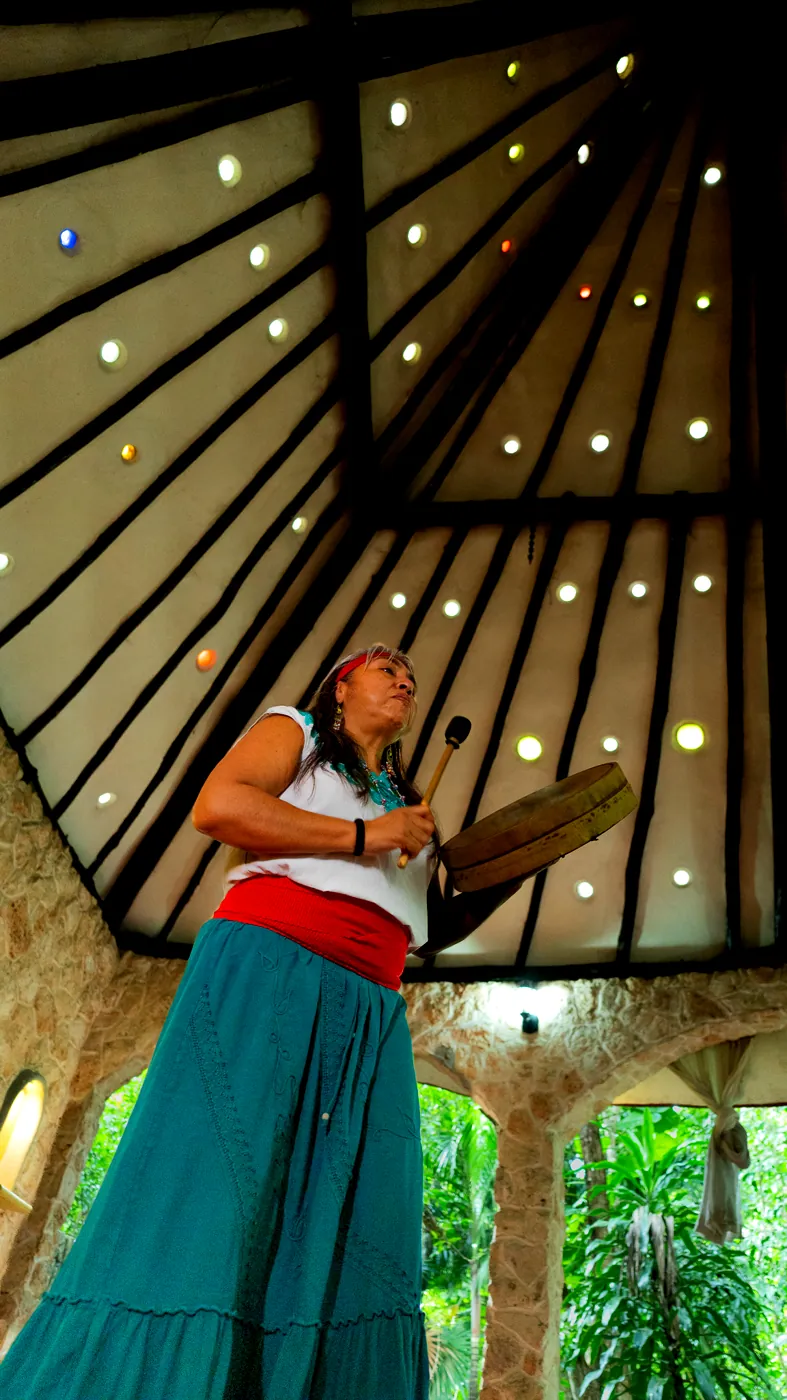
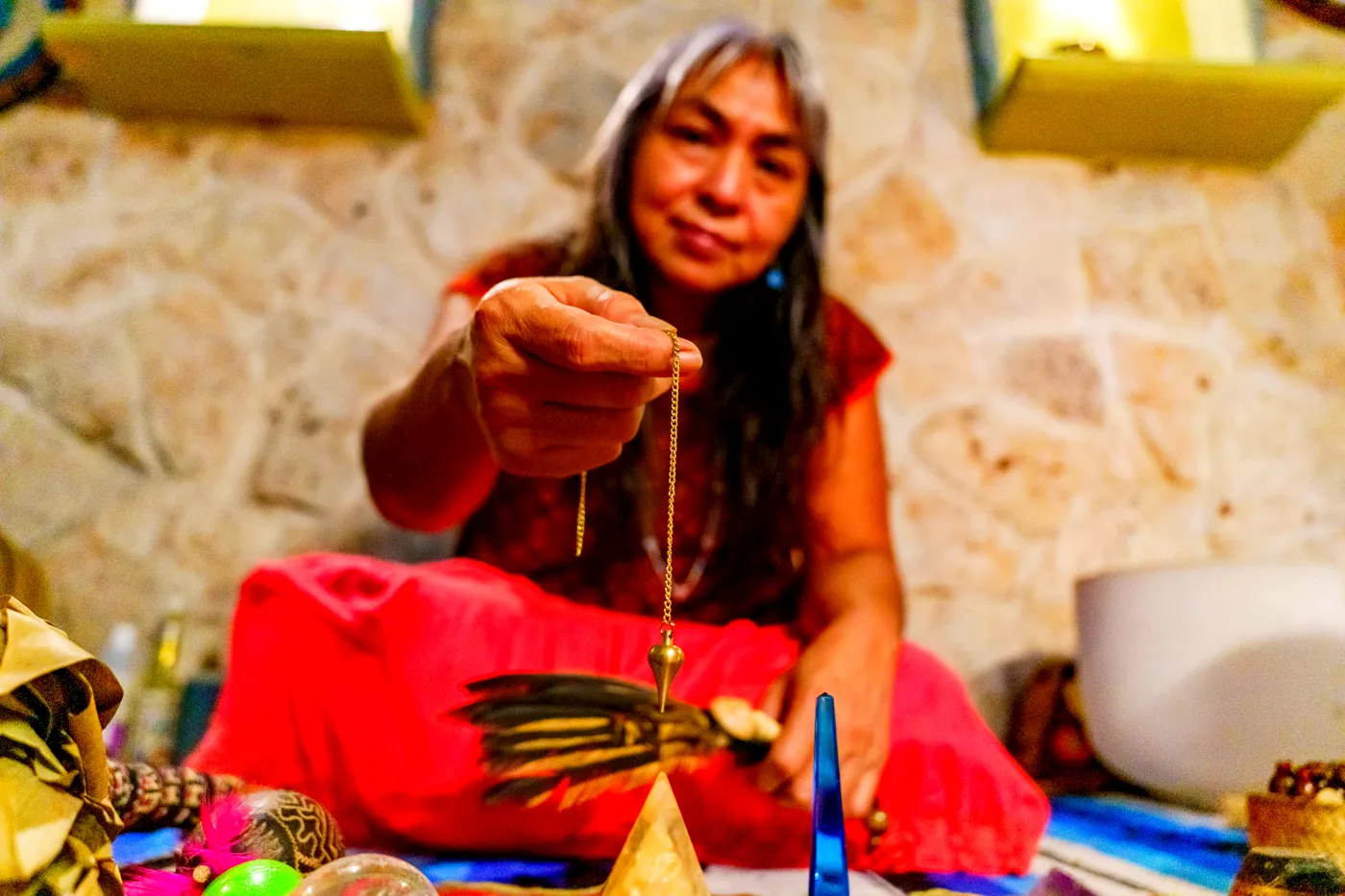
Full disclosure: Sandy works with Bluestone Retreats, which publishes this blog. She was born in Veracruz into a family of Totonac healers, has more than a decade guiding ceremonies, and leads temazcal, sound journeys and women’s circles in the jungle near Cancún. Read her story.
Where else to find women-led ceremonies
Retreat marketplaces let you filter by facilitator and read reviews. In Oaxaca, for example, Retreat Guru lists temazcal and curandera programs. Always ask the questions above, wherever you book.
Roles women play in traditional healing
- Curandera: a general healer working with herbs, prayer and cleansing.
- Partera: a traditional midwife, often also a temazcal keeper.
- Hierbera: a specialist in medicinal plants.
- Sobadora: a healer who works with massage and the body.
- Temazcalera: a woman who guides the temazcal.
What a limpia is
A limpia is a cleansing ritual. The healer may use herbs, an egg, copal smoke, flowers or water, passing them around the body while praying. It is one of the most common practices of curanderismo and is often part of women-led ceremonies.
Respect and cultural appropriation
Interest in women healers is growing, and so is the risk of turning living traditions into products. Choose guides who have a real lineage or long apprenticeship, who speak about their teachers, and who work respectfully with their communities. As a participant, come to learn, not to collect experiences.
A woman temazcal guide near Cancún
At Bluestone, the temazcal is guided by Sandra “Sandy” Reyes, who comes from a family of Totonac healers in Veracruz. For many women, being guided by a woman in the heat and darkness of the temazcal makes the experience feel safer and more personal.
Curanderismo beyond Mexico
Curanderismo also lives in the United States, especially in the Southwest, where Mexican-American families have kept it for generations. Universities and museums have documented it, and some offer courses, like the program at the University of New Mexico.
What a session with a curandera can look like
- A conversation about what brings you.
- A cleansing (limpia) with herbs, smoke or flowers.
- Prayer, songs or silence.
- Advice for the following days, often simple and practical.
Ethics and boundaries
A trustworthy healer explains what she will do, asks permission before touching you and never asks you to stop medical treatment. If something feels wrong, you can stop at any time.
Glossary: key terms
- Curandera: a traditional healer.
- Partera: a traditional midwife.
- Hierbera: a specialist in medicinal plants.
- Limpia: a cleansing ritual.
- Temazcalera: a woman who guides the temazcal.
- Copal: resin burned as incense.
Not every woman who guides ceremony uses these titles. Many prefer to be known simply by their name and lineage, as Sandra “Sandy” Reyes, the temazcal guide at Bluestone, does.
The bottom line
Women have always been at the heart of healing traditions in Mexico, as curanderas, parteras and temazcaleras. If you are looking for a woman-led ceremony, look beyond titles: ask about lineage and experience, how the guide works with safety and consent, and whether she makes realistic promises. A trustworthy guide will welcome your questions and never ask you to abandon medical care.
Compare your options
Learn more and find women-led ceremonies
- Retreat Guru – Temazcal in Oaxaca Oaxaca
Temazcal and curandera programs on the Oaxacan coast. - UNM Curanderismo program New Mexico, USA
University courses on traditional Mexican healing. - Amansala Tulum
Beachfront retreats, known for its long-running Bikini Bootcamp for women. - Sessions with Sandy (Bluestone) Cancún
Temazcal, sound journeys and individual sessions with Sandra “Sandy” Reyes. - She Who Remembers (Holistika) Tulum
A six-day women’s retreat listed on BookRetreats.
Listings are independent and unpaid. Retreats México is published by Bluestone Retreats, which appears here alongside other options. How we write.
Frequently asked questions
What is a curandera?
A traditional healer in Mexican and Mexican-American culture who works with herbs, prayer, cleansing rituals and sometimes the temazcal.
Is a curandera the same as a shaman?
Not exactly. “Shaman” is a general term from other cultures. In Mexico, women healers are more often called curanderas, parteras or abuelas, depending on their role.
How do I find a trustworthy female shaman in Mexico?
Look for a real lineage or apprenticeship, years of experience, clear safety practices, a supportive team and no promises of cures. Ask questions before booking.
Are there women-only ceremonies in Mexico?
Yes. Many retreats offer women’s circles and women-only temazcal ceremonies.
What is a limpia?
A traditional cleansing ritual in which a healer uses herbs, an egg, copal smoke, flowers or water while praying, to cleanse a person’s energy.
What is a temazcalera?
A woman who guides the temazcal ceremony, often trained within a family or community tradition.
Does curanderismo exist in the United States?
Yes, especially in the Southwest, where Mexican-American families have practiced it for generations and universities have studied it.
What is a partera?
A traditional midwife in Mexico, who often also guides the temazcal for women.