Last reviewed: November 2026 · Reviewed by the Retreats México editorial team
Quick answer
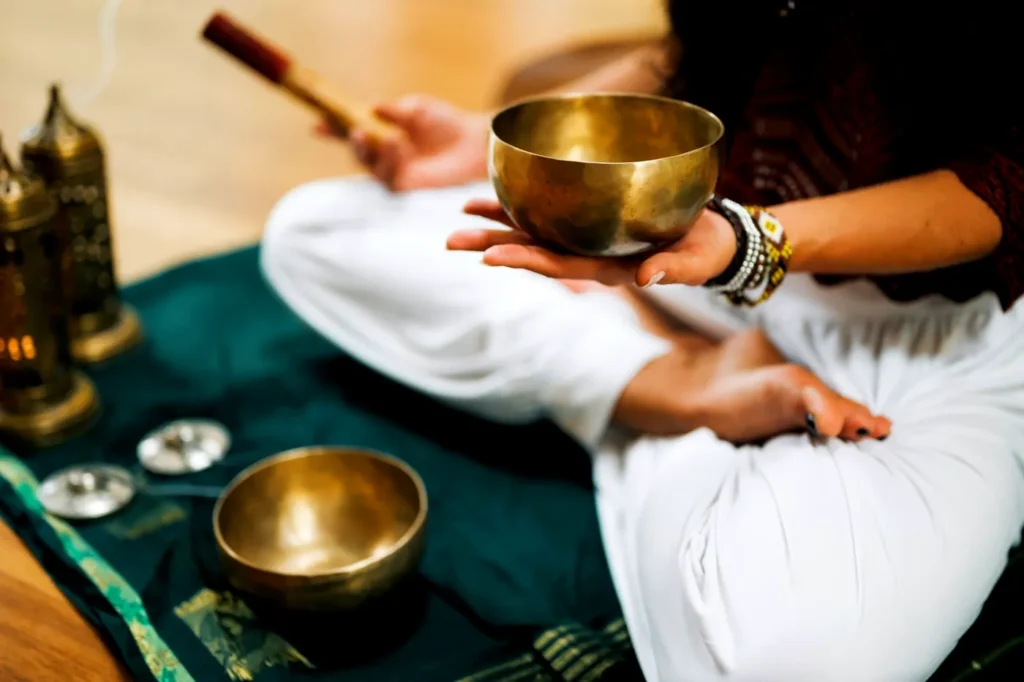
A sound bath is a guided relaxation session where you lie down and listen to instruments such as singing bowls, crystal bowls, drums, handpan and voice. There is nothing to do but listen. A 2017 observational study of singing bowl meditation found participants reported less tension and better mood afterwards. It is gentle, but people with sound sensitivity or certain conditions should check with their doctor.
If you have never been to one, “sound bath” sounds strange. You do not get wet. You lie down, close your eyes, and let sound wash over you.
Key takeaways
- A sound bath is guided listening, usually lying down.
- Common instruments: drums, singing and crystal bowls, handpan, voice.
- Research is early but promising for relaxation and mood.
- Bring a blanket and let yourself rest; falling asleep is normal.
What happens in a sound bath?
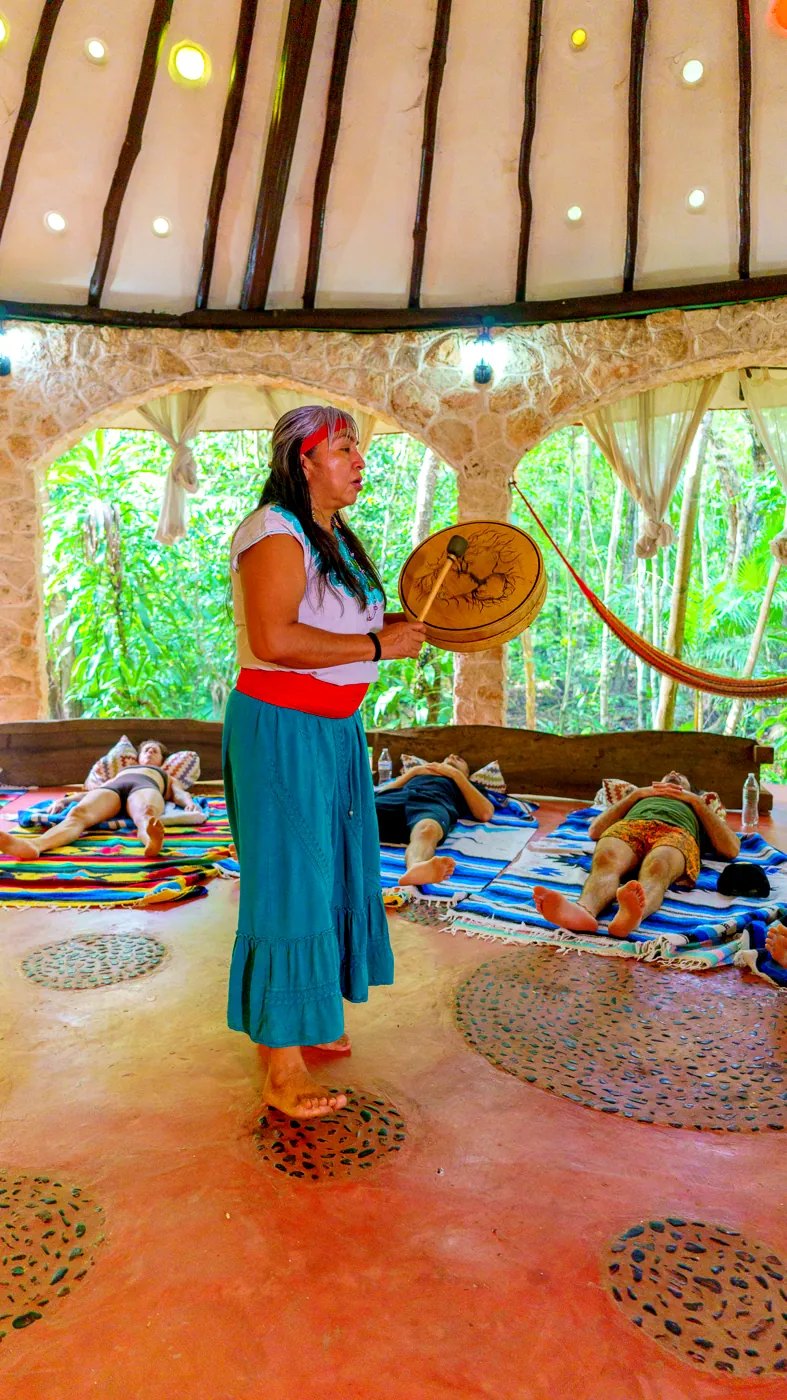
- You lie on a mat with a blanket and pillow.
- The guide invites you to breathe and relax.
- For 30 to 60 minutes, the guide plays instruments, sometimes moving around the room.
- The session closes with silence and a slow return.
The instruments
- Drum: a steady rhythm that many traditions use to help people go inward.
- Singing bowls: metal bowls with long, layered tones.
- Crystal bowls: pure, sustained notes you can feel in your body.
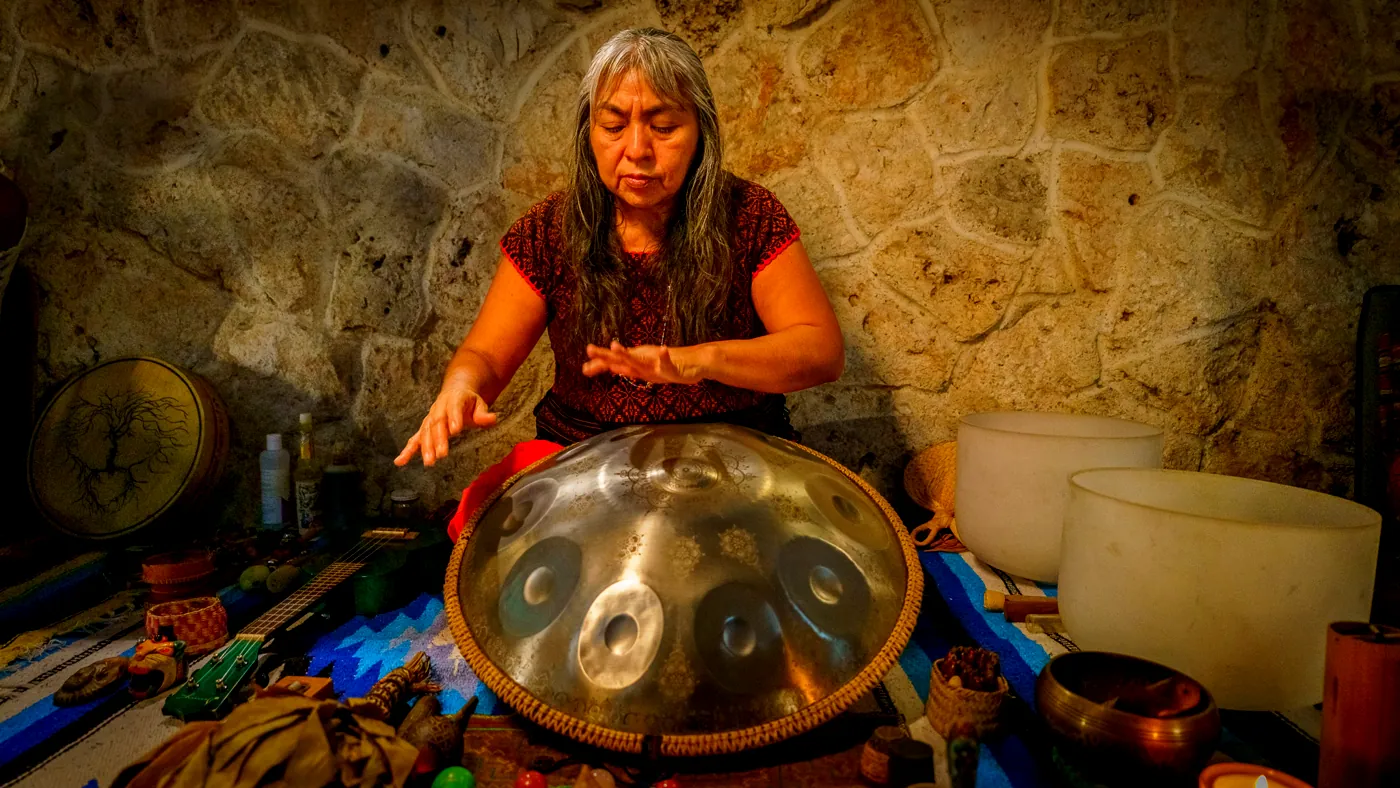
- Handpan: a melodic steel instrument with a soft, dreamy sound.
- Voice: songs and humming, sometimes in Indigenous languages.
What does the research say?
Studies are still small. A 2017 observational study in the Journal of Evidence-Based Complementary & Alternative Medicine found that after a singing bowl meditation, participants reported less tension, anger and fatigue and better mood (Goldsby et al., PubMed). For an overview of meditation research in general, see the NCCIH fact sheet. A sound bath is relaxation, not medical treatment.
A sound journey in the jungle
At Bluestone Retreats near Cancún, sound journeys happen in a maloca open to the jungle, guided by Sandra “Sandy” Reyes, with birds and wind joining the instruments. Meet Sandy. (Disclosure: Bluestone publishes this blog.)
Tips for your first sound bath
- Wear comfortable clothes and bring a blanket.
- Use earplugs if you are sensitive to loud sounds.
- If you fall asleep, that is fine.
- Drink water afterwards and take it easy.
Sound bath, sound healing or sound journey?
The terms are often used interchangeably. Sound bath usually means a relaxing session where you simply listen. Sound healing is a broader term some practitioners use for therapeutic intentions. Sound journey often describes a more ceremonial session with drums and voice, like those in Mesoamerican-inspired retreats.
What it feels like
Many people feel their body get heavy, their breathing slow down and their thoughts drift. Some see colors or images; others simply fall asleep. A few feel emotional. All of this is normal. If anything feels uncomfortable, you can sit up, open your eyes or step out.
Sound baths in Mexico
You will find sound baths in yoga studios in Tulum and Playa del Carmen, in wellness resorts and at jungle retreats. In the jungle, the instruments mix with birds, wind and rain, which many people find makes the experience deeper. Near Cancún, Sandra “Sandy” Reyes, who also guides the temazcal at Bluestone, leads sound journeys with drum, handpan and crystal bowls.
How to try it at home
- Lie down in a quiet room with a blanket.
- Use headphones and a recording of bowls or drum.
- Set a timer for 20 minutes.
- Breathe slowly and let the sound guide your attention.
Is it safe?
Sound baths are gentle, but volume and certain frequencies can bother people with sound sensitivity, tinnitus or some neurological conditions. Tell the guide beforehand and position yourself further from the instruments if needed.
Sound baths and sleep
Many people fall asleep during a sound bath, and some report sleeping better the night after. If you struggle with sleep, a short recorded sound session before bed can be a gentle routine to try, alongside the advice of your doctor.
Group vs. private sound sessions
Group sessions are affordable and have a special shared energy. Private sessions allow the guide to adapt instruments, volume and length to you, and sometimes include instruments placed close to the body.
How to choose a sound bath
- Ask which instruments are used and how loud the session is.
- Check the length and whether you will lie down.
- Look for a guide with training and experience.
- Tell them about any sensitivity to sound.
Glossary: key terms
- Singing bowl: a metal bowl that produces a long, layered tone.
- Crystal bowl: a quartz bowl with a pure, sustained note.
- Handpan: a melodic steel instrument played with the hands.
- Gong: a large metal disc with a powerful, enveloping sound.
- Sound journey: a guided session of drums, voice and instruments.
The bottom line
A sound bath is one of the gentlest practices you can try on a retreat: you lie down, close your eyes and listen. Research is still early but encouraging for relaxation and mood. Choose an experienced guide, mention any sound sensitivity and simply let yourself rest.
Compare your options
Places with sound and meditation programs
- Holistika Tulum Tulum
Jungle hotel and wellness center with yoga, sound and holistic programs. - Hridaya Yoga Mexico Mazunte, Oaxaca
Beachside center known for meditation and silent retreats. - Sessions with Sandy (Bluestone) Cancún
Temazcal, sound journeys and individual sessions with Sandra “Sandy” Reyes. - Kripalu Center for Yoga & Health Massachusetts, USA
A well-known US retreat center, a useful benchmark for programs and prices.
Listings are independent and unpaid. Retreats México is published by Bluestone Retreats, which appears here alongside other options. How we write.
Frequently asked questions
What is a sound bath?
A guided relaxation session where you lie down and listen to instruments like bowls, drums, handpan and voice.
What are the benefits of a sound bath?
Early research, such as a 2017 study on singing bowl meditation, found participants reported less tension and better mood. It is a relaxation practice, not a medical treatment.
How long does a sound bath last?
Usually between 30 and 60 minutes, sometimes longer during retreats.
Who should avoid sound baths?
People with strong sound sensitivity, some forms of epilepsy or certain hearing conditions should check with their doctor first.
What is the difference between a sound bath and sound healing?
A sound bath is a relaxing listening session; sound healing is a broader term some practitioners use for sessions with therapeutic intentions.
Can I do a sound bath at home?
Yes. Lie down with headphones and a recording of bowls or drums for about 20 minutes, breathing slowly.
Can a sound bath help me sleep?
Many people fall asleep during sessions and some report better sleep afterwards; it can be a gentle routine alongside medical advice.
What is a handpan?
A melodic steel instrument played with the hands, known for its soft, dreamy sound; Sandy uses it in her sound sessions.
Sources & further reading